

Vietnam
Adventures in Hanoi, Ninh Binh and Hoi An

We pass through a restaurant, push aside a plastic strip curtain, and take an elevator four floors up, above a tattoo parlor. This cannot be the Airbnb.
The air smells heavy with pollution. A thick haze hangs over the city, softening the skyline as if everything is slightly out of focus. It is loud in a way that feels permanent. Horns, yelling, a constant layer of city noise that never seems to silence.
I am in Hanoi, capital of Vietnam. A city of nearly nine million people, dense and unrelenting. We drop our bags and do the only thing that makes sense in a new city: find food.
Scooters pour through intersections from every direction. Sidewalks double as parking lots. The rule for crossing the street is simple. Walk steadily. Do not hesitate. The traffic adjusts.
On motorbikes around me are things that should not fit. Two dogs. Families of four, son, father, daughter, mother. A woman driving with one hand, dragging a small dumpster with the other.
Women wash dishes on the curb. Vendors in conical hats balance baskets from shoulder poles. Young ladies in short skirts wait at street corners, scanning passing pedestrians.
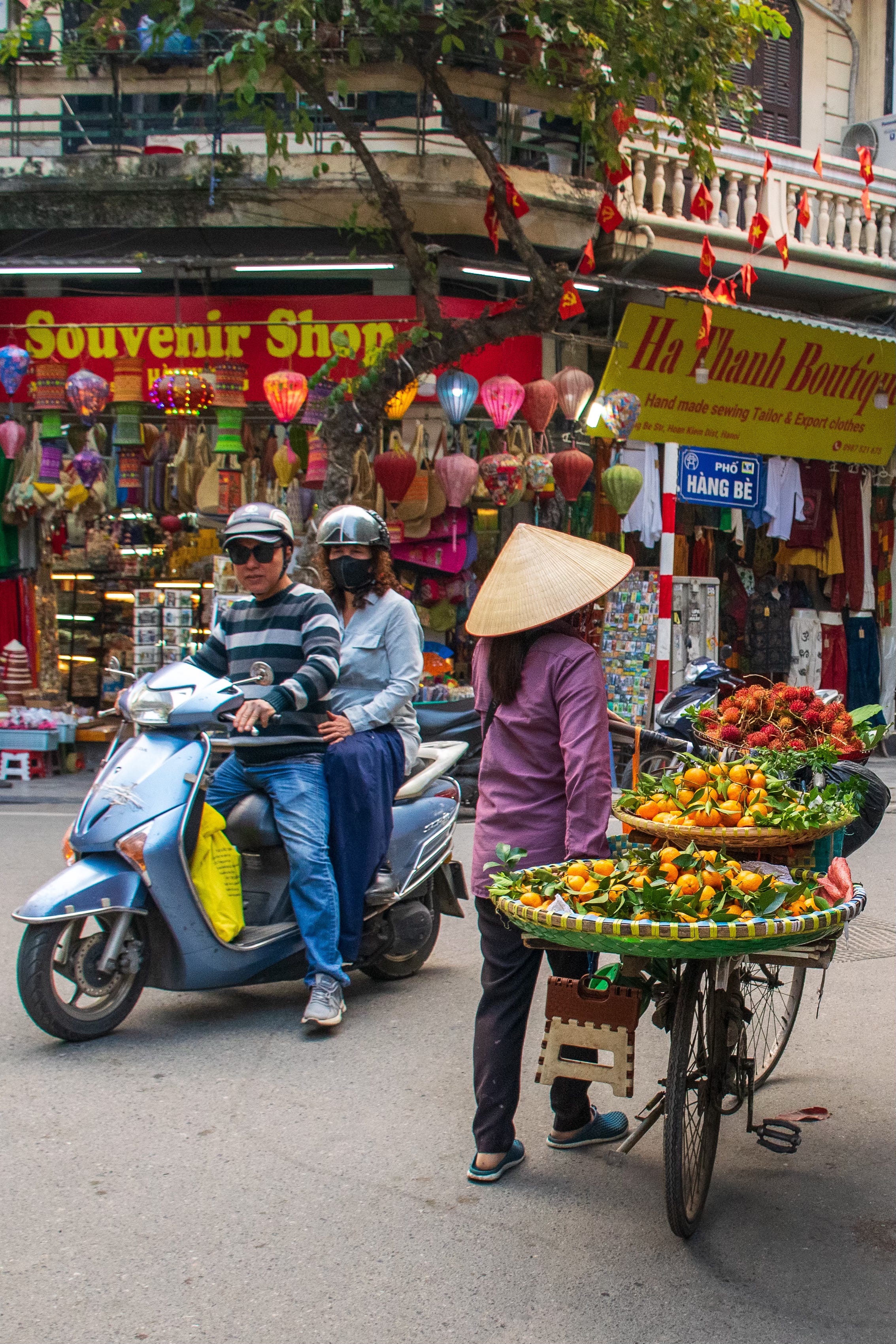
Thankfully, the banh mi shop is a short walk from the apartment. The sandwich arrives in a crusty baguette, a remnant of French rule. An insect crawls slowly along the inside of the glass display case. I look at it, then at the sandwich, and decide to eat anyway.
The next morning, the horns are honking well before I get out of bed. There is no gentle way to ease into the day here. We wander the streets, untethered to a strict itinerary.
Store after store sells fake merchandise. North Face, Patagonia, Lululemon. All the “real stuff” for these brands is made in Vietnam anyway, so skilled workers take leftover material and make jackets and shoes that are 99% similar to the real thing.
Buying anything here is a strange dance. Prices start high, leaving room to haggle. Ask around and every shop seems to open at the same number, as if they all agreed on where to start. Push too hard and you risk insulting the seller and walking away with nothing. Accept too quickly and you know you have been had.
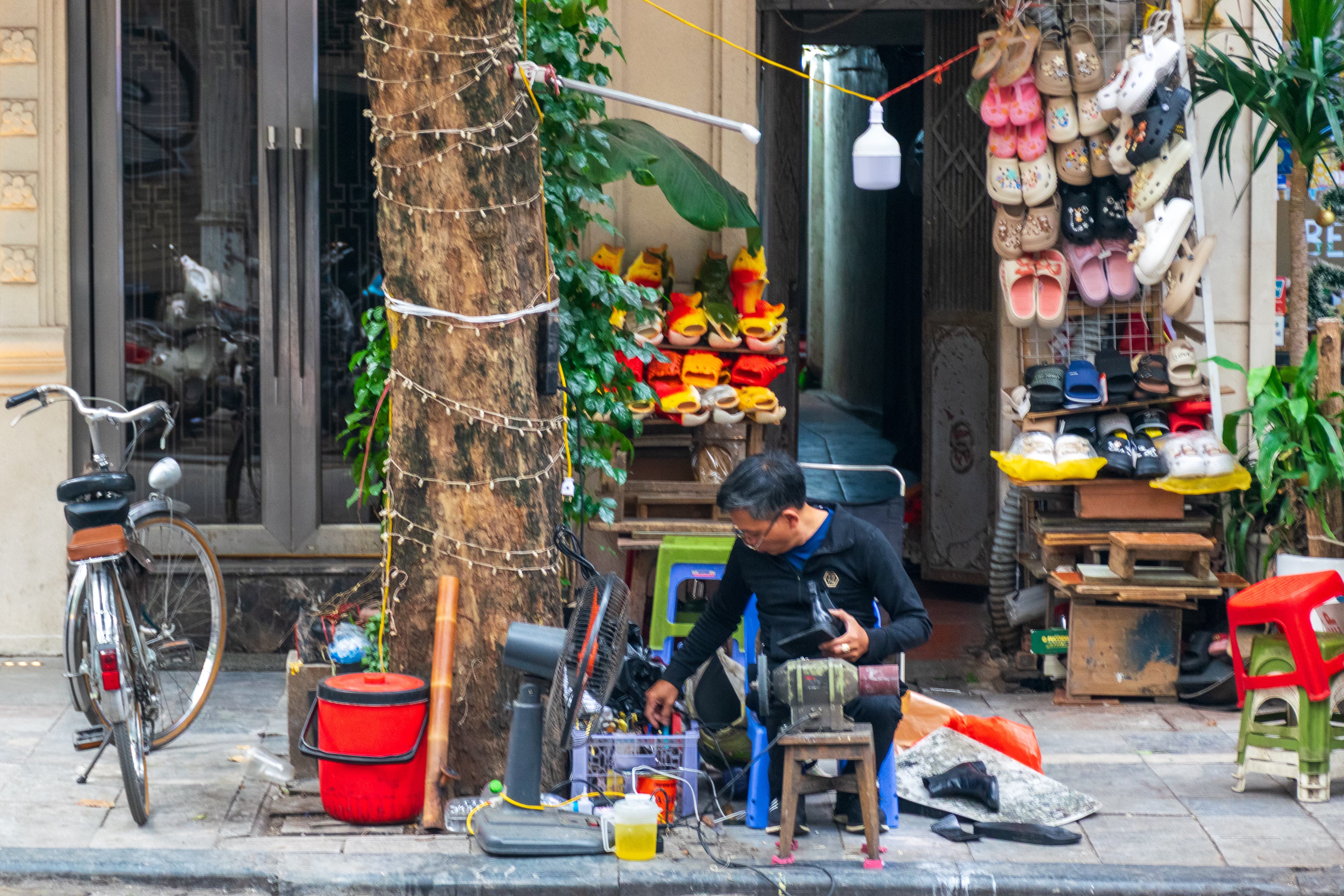
While walking, a man notices my dirty sneakers, still caked with mud from temple-hopping in Cambodia, and says he will clean and repair them for 50,000 Vietnamese dong, about 1.90 USD. Great, now my old sneakers are as good as new!
Anthony Bourdain once said: ‘There is no other way to see this city, Hanoi, than from a motorbike or a scooter. To do otherwise would be to miss it all. It is one of the great pleasures of my life to join the river of people rushing through the streets. Vietnam, it grabs you and doesn’t let you go.’
Here in Vietnam, the Uber equivalent is Grab and, and best of all, you can request a scooter or motorbike. The driver finds you just like an Uber, hands you a green Grab-branded helmet, and you have seconds to hang on before you are swept away.
I do not even know how or what to hold on to. I am told not to hold the side of the scooter because it prevents the driver from turning so I tense my entire body and pray I am not thrown overboard as the scooter hops curbs, drives on sidewalks, and squeezes through inch-wide gaps next to cars and trucks.
I am hit with nostalgia as I remember my childhood trips to India when I would fight to ride on my grandpa’s scooter. There is no greater fun in the world than exploring on two wheels.
The destinations themselves become a blur, almost an afterthought. Buddhist pagodas, lakes, murals, tree-lined streets, French colonial buildings. For less than a dollar, you can cross the entire city.
One of the most popular places to visit in Hanoi is “Train Street”, a working railroad track running through a narrow residential lane. We enter through a small cafe and are shown to a table right beside the tracks. For a while, nothing happens. People sip coffee and take photos. Then the staff begins shouting, quickly pulling tables and chairs away from the rails. There is no warning, no barrier.
Within seconds, a train comes barreling through, so close I can feel the rush of air against my face. It is loud, sudden, and over almost as quickly as it began.
It is absurd and exhilarating. A microcosm of Hanoi itself.
It felt as if Hanoi was trying to prevent us from leaving, its tentacles holding on as we tried to get away. The traffic moved in two directions, people, scooters, and cars competing for space that did not exist. And then there was us, dragging our luggage half on the road, half on the ‘sidewalk’.
Luckily, the taxi was only a few blocks away, and the walk was short but I would pay to see the look on people’s faces back home if they saw this traffic. It took somewhere between thirty and forty-five minutes to reach the outskirts of Hanoi, but eventually we escaped the city and joined a highway heading south.
We arrived in Tam Coc, in Ninh Binh province. Pulling into the hotel brought instant relief. The resort sat along the water’s edge and felt like a different world after chaotic, polluted Hanoi. In the distance, limestone hills rose sharply from the flat landscape. Mountains have always called to me.
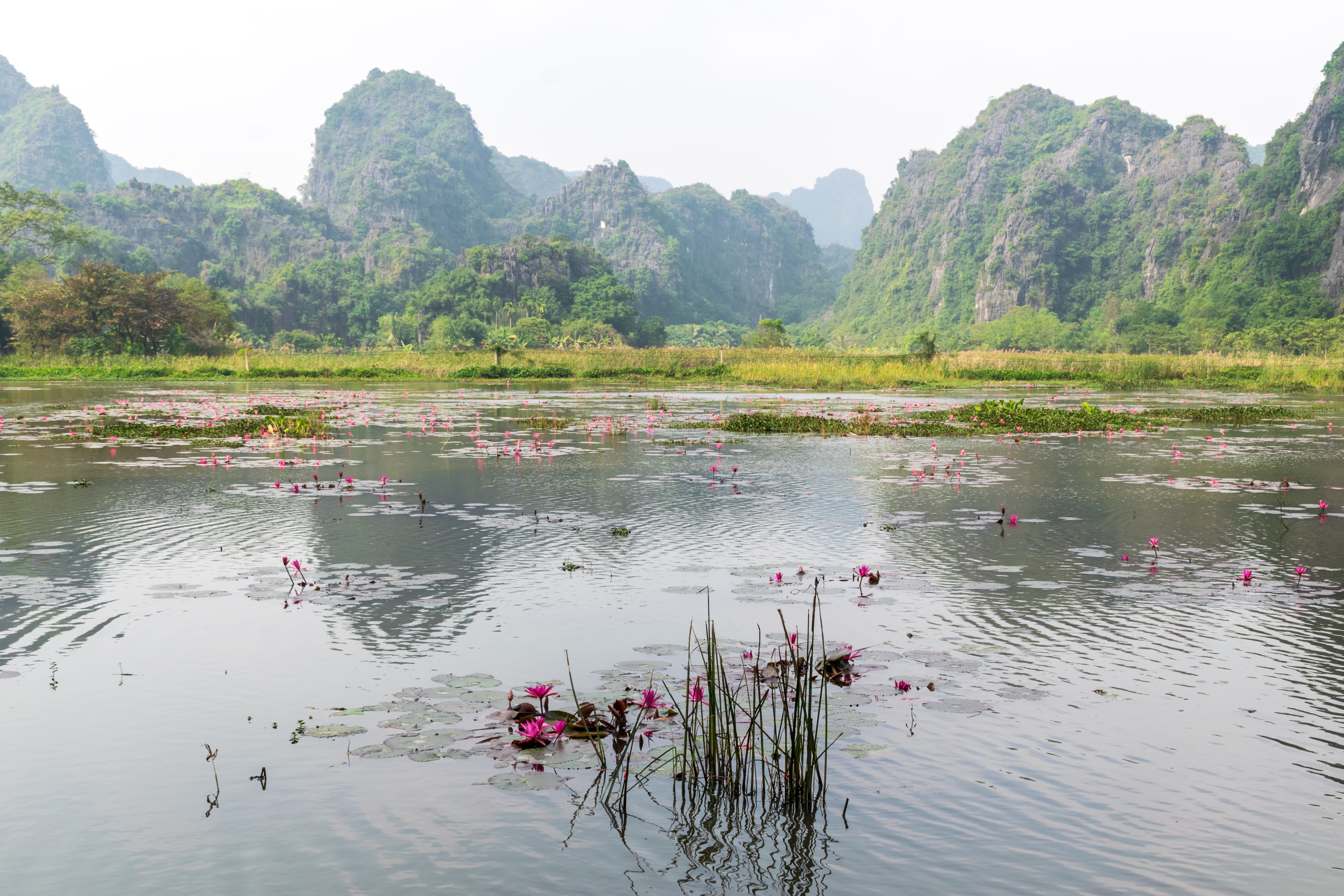
We walked along the river, watching boats drift by as guides rowed orange-vested tourists with their feet. The air was cool, and by the time lunch arrived, the tension had slipped from my shoulders.
Several bicycle shops turned us away when we asked about renting a scooter. Some worried about the police, others about our complete lack of experience. The search would continue. I did not want to leave Vietnam without riding a scooter.
For now, e-bikes were enough. They moved nearly as fast as the scooters, and within minutes the buzz of Tam Coc faded behind us. The road wound beneath cliffs and alongside flooded fields. The sky was muted, giving the landscape a quiet mystique. I felt free.
The paved road gave way to gravel. Smaller paths branched off toward scattered homes in the distance. Near the end of the road, an English motorcyclist was studying an itinerary scribbled on a piece of paper. He was traveling solo across Vietnam for twenty days and showed it to us. I admired his sense of adventure. These are my kinsmen, regardless of background or nationality.
A tattered bridge, with several planks missing, led to a narrow path through thick foliage. Farther on stood an old ladder, a handrail on only one side and rising almost straight up. A short scramble over the rocks brought us to a vantage point overlooking the landscape.
The light was fading, and it was time to return to town. Fishermen and ladies in straw hats lined the route back, a final glimpse of the countryside before the onslaught of traffic resumed. What an adrenaline rush. This was the Vietnam of my dreams.
The next day, the search for scooters resumed. I did not think I could call myself a traveler until I had earned the "badge of honor" of riding a scooter in Southeast Asia.
Luckily, it did not take long. The first shop said yes immediately when we asked if we could rent one, no questions asked. No request for a license. No request to see a passport. No asking if we had ever ridden a bike before. We filled out a form the owner did not even glance at. No instructions. No return time. For 100,000 dong, about three dollars, we had a scooter indefinitely.
One of the scooters was nearly empty, so we were pointed toward a gas station somewhere "that way," about two kilometers down the road. We asked for a little gas, paid a few dollars, and headed out.
Beyond town, the way to Bich Dong Pagoda wound through a landscape shaped by water. Ponds, flooded fields, and narrow waterways stretched alongside the road.
The pagoda sits against the base of a mountain. A bridge crosses over lotus flowers before a narrow path leads to the entrance. Stone steps climb through a cave lined with stalactites and emerge at a small overlook above the valley.
Next came Mua Caves. I am not sure why it is called that, as the main attraction is a 500-step climb to a viewpoint, with a dragon statue perched at the top of the mountain. The steps were manageable until the very end, where the rocks turned sharp, almost like knives pressing through the soles of your shoes.
On one side were views over the rice paddies, and on the other, the river and the mountains, each one fading lighter than the last, like silhouettes dissolving into the haze.
After the climb, we sat on the wooden walkways, watching fish rise to the surface and gently nip at the water. Lily pads stretched across the surface, with the green hills in the distance.
Later that evening, we took a boat ride through Trang An, a scenic area of rivers, caves, and limestone karsts in Ninh Binh.
Getting there was a ride in itself, weaving past the edge of town, through a chaotic roundabout and out toward the countryside. Before long, an elderly Vietnamese woman was guiding our narrow boat across the water.
The route wound through several caves, the longest of which was Dot Cave. Before long, its dark entrance appeared ahead. For nearly twenty minutes, the boat drifted through the one-kilometer passage. At times the ceiling was so low that we had to duck, our heads nearly to our knees. Stalactites hung overhead, dripping steadily, while yellow lightbulbs cast an eerie glow through the darkness. I had never experienced anything quite like it.
The next cave was much shorter but opened into a vast chamber. It felt like a throne room for some river-dwelling king. At one point, langur monkeys appeared along the water’s edge.
Between caves, temples emerged from the landscape, tucked into the cliffs and along the banks. The sky was overcast, the light muted. The mountains seemed to rise straight from the water, creating a landscape that felt almost prehistoric. It was easy to see why scenes from Kong: Skull Island were filmed here.
The next day, it was time to return to Hanoi. A few hours later, we were boarding a flight south to central Vietnam and the old trading town of Hoi An.
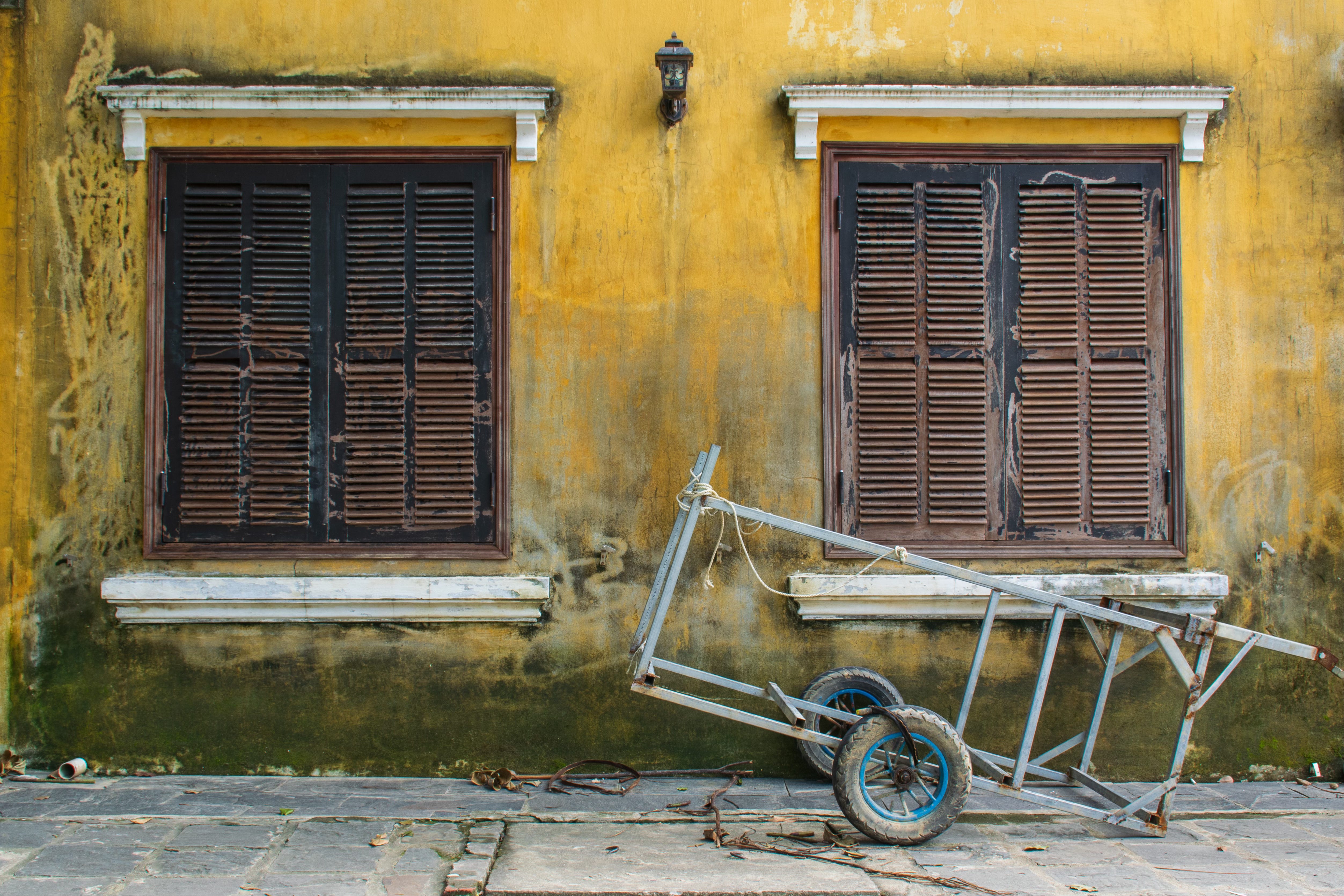
I wound through narrow alleyways from my hotel into the old town of Hoi An. The outskirts offered glimpses of local life, smiles from the elderly, open doors into living rooms, children playing in the streets. But soon enough, the lanes led into the tourist center, Vietnam’s “yellow town.”
The buildings were indeed a fading banana yellow, weathered by time and the tropical climate. For centuries, Hoi An was one of the most important trading ports in Southeast Asia, welcoming merchants from China, Japan, and Europe. Today, the old town remains remarkably intact, its narrow streets lined with ancient houses, temples, and workshops.
I sat near the Japanese Bridge, watching tourists pose for photos. One model dropped her shoe into the river while trying to pose. Nearby, a local painter worked quietly on capturing the scene.
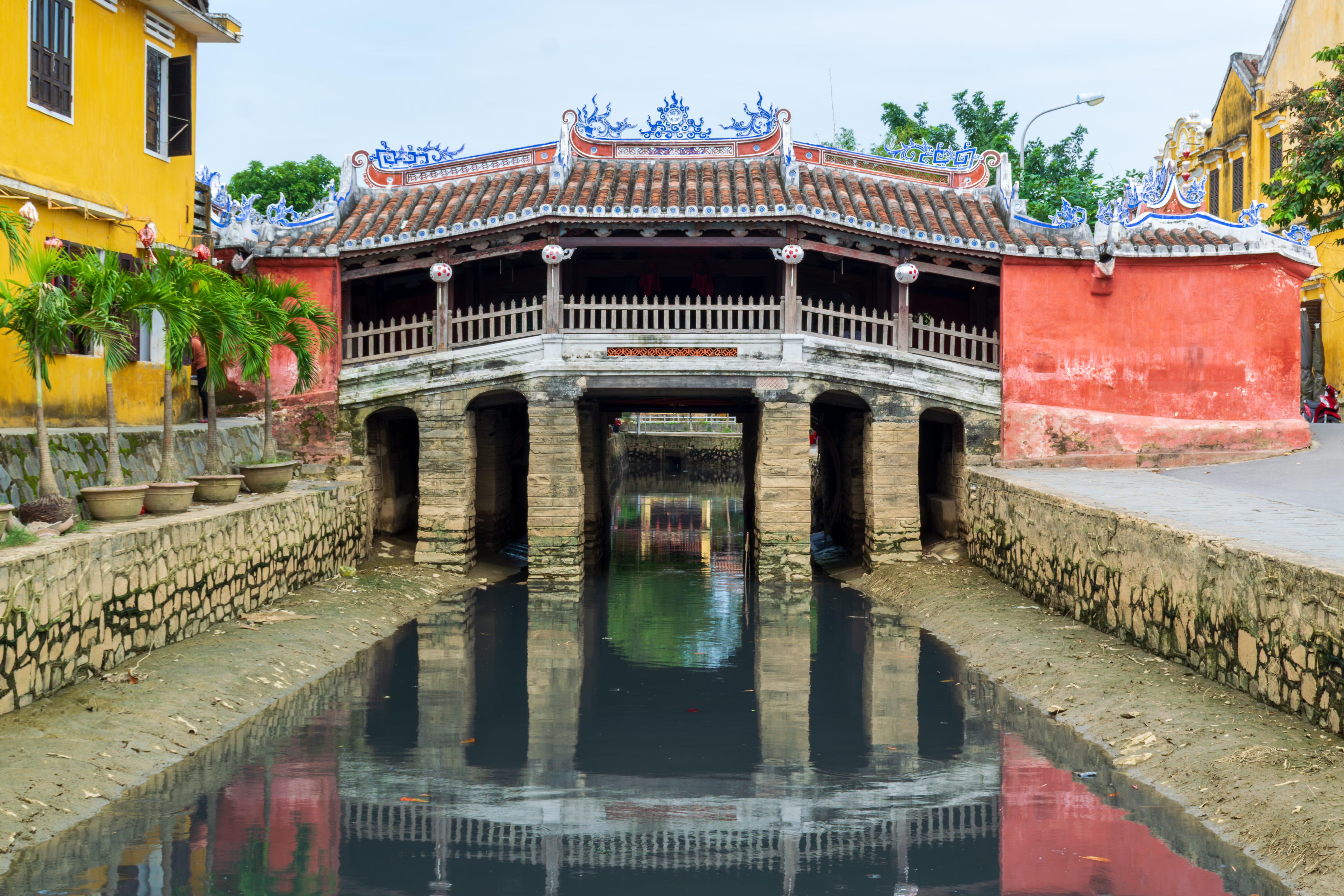
Hoi An is also famous for its tailors. Nearly every street seemed to have a shop promising custom suits, dresses, shoes, and even leather bags within a matter of days. Instead, I found myself drawn to a lantern shop overflowing with hundreds of hand-painted lanterns and left with a few of my own.
As evening approached, the town began to change. One by one, lanterns illuminated balconies, storefronts, and alleyways until the entire old town glowed in shades of red, gold, blue, and green. Hoi An's lantern tradition dates back centuries, influenced by Chinese merchants who believed the lanterns would bring good luck and prosperity.
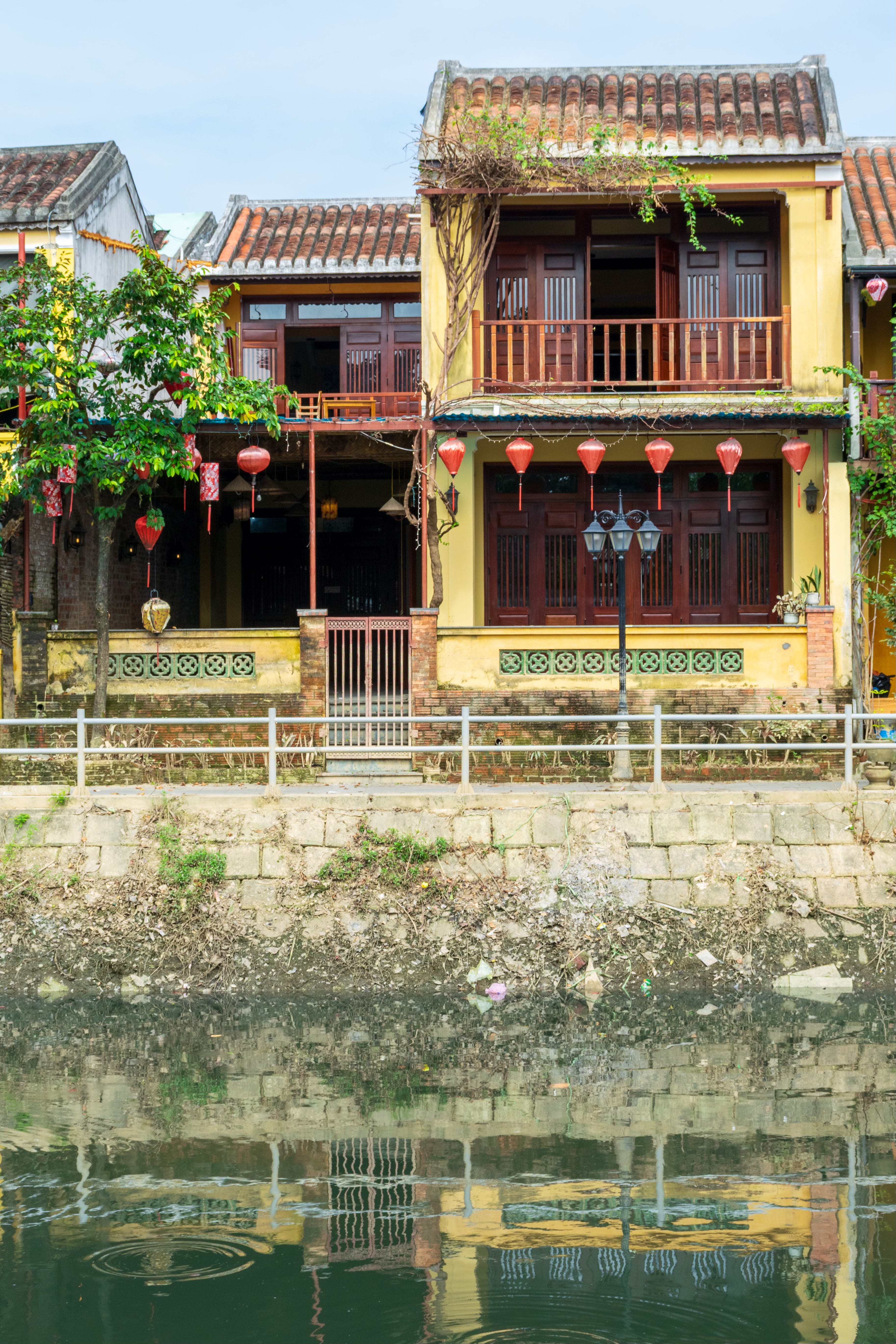
We took a boat ride along the river as lantern light danced across the water. Floating lanterns carrying tiny candles drifted by in every direction, each one sent off with a wish.
Later, the rain began to fall and the water level slowly rose. There was a faint smell of something burning, mixed with exhaust from passing scooters, incense drifting from somewhere unseen, and the constant hum of horns in the background.
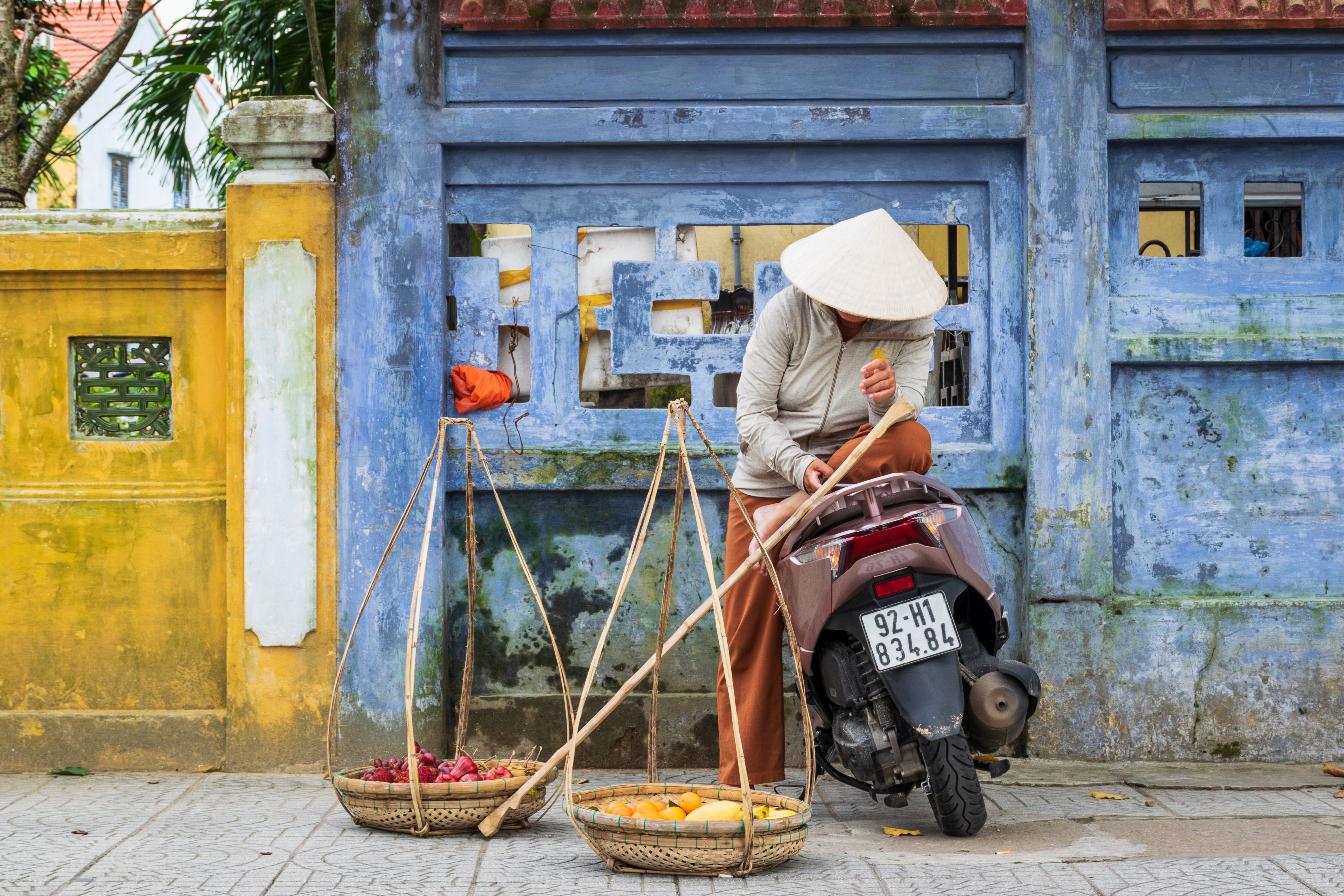
This was the end of my trip to Vietnam. I had wanted to come here for years because, in my mind, Vietnam was synonymous with adventure. It felt distant, chaotic, and vaguely associated with a war I knew very little about.
Ultimately, adventure is exactly what I found. Vietnam is not a country that lets you sit on the sidelines. It demands participation. Learning how to cross the street. Learning how to bargain. Learning how to ride a scooter through traffic that seems impossible.
I can understand why Anthony Bourdain loved this place. It feels alive. People are always out. Markets spill onto the sidewalks. Meals are eaten on plastic stools along the side of the road. Things are constantly happening. Vietnam reminded me of what makes travel exciting in the first place, the feeling that something unexpected might be waiting around the next corner.
Great photography and writing! I have been revisiting memories from Vietnam and writing about my time there, so this was an especially timely and fun read for me. Glad you were able to rent a scooter and see more of the beautiful countryside - it's so freeing!
Once Vietnam is experienced… it never leaves your soul. Excellent writing.