

Hong Kong
City of Skyscrapers

For seven years, I’ve wanted to return to Hong Kong. It was the first true mega-city I ever visited, long before Shanghai, Tokyo, or Seoul, and I had never seen anything like it. As an American, it is hard to fathom a place of such density and scale until you are standing inside it, surrounded by a city that rises endlessly in every direction.
Even after a fifteen-and-a-half-hour flight from New York, I was awake and ready to explore. Hong Kong International Airport moved with quiet efficiency, immigration was quick, and my bag was already circling the belt when I arrived. Within minutes, I had cash in hand, an Octopus Card loaded, and was on the Airport Express, the city beginning to reveal itself as the train pulled toward Kowloon Station.
The train was spotless, quiet, and precisely on time. As it moved toward Kowloon, it occasionally rose above ground, and through brief flashes I caught my first real glimpses of Hong Kong. High-rise buildings packed together like fistfuls of pencils rose straight into the sky.
Kowloon Station was big and disorienting, and after a few failed attempts to find a ride pickup to our hotel, we gave up on Uber altogether. After a transcontinental flight, I didn’t have the brain capacity to solve that puzzle anyway. Instead, we flagged down a classic red Hong Kong taxi, which felt like the proper way to enter the city. Like New York’s yellow cabs, they’re unmistakable and an instantly recognizable symbol of the city itself.
I was staying at the Rosewood Hotel, freshly crowned the best hotel in the world. I don’t know if my backpacker self that traveled here in 2017 would be proud or disappointed. Rising right on Victoria Harbour and overlooking the panorama of Hong Kong Island, there are not many vantage points like this in the world.
After breakfast, we walked along the Avenue of Stars. The skyline of Hong Kong almost felt like an apparition, like a hologram hovering in the background of some virtual reality video game. Green mountains dropped into the harbor as a dizzying number of buildings with glowing signs rose, competing with each other for who would be the tallest. The water below was just as busy, one of the world’s most active harbors, crowded with boats and barges moving in every direction. As much as I love the view back home of the New York City skyline from Hoboken or Jersey City, I have to say Hong Kong has the best skyline in the world.
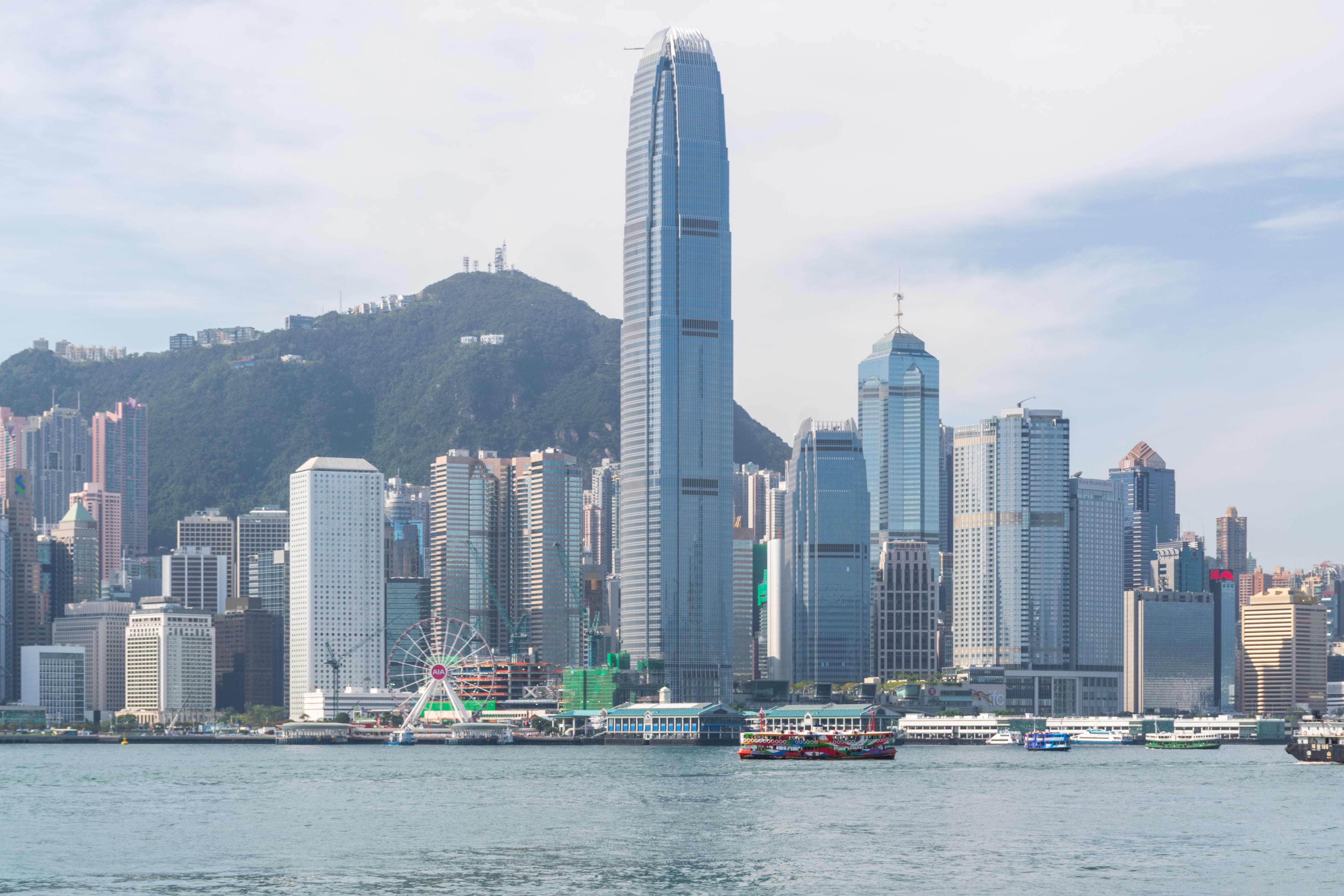
In the afternoon, we walked along the harbor to the Ferry Pier and boarded the iconic Star Ferry, which has been shuttling passengers across Victoria Harbour between Tsim Sha Tsui in Kowloon and Central on Hong Kong Island for over a century. It’s a short ride, less than ten minutes, but for less than a dollar you’re gliding across the water with Hong Kong rising on both sides. It’s easy to see why Nat Geo Travel has ranked this as one of the fifty experiences to have in a lifetime.
From Central, we made our way up to Victoria Peak, climbing higher and higher as the road hugged the mountain’s curves until the skyscrapers fell away beneath us. Visiting the Peak had been one of my fondest memories from my last trip to Hong Kong, and it felt almost unreal to be back again, older, perhaps a little more tired, but no less spellbound by places like this. From above, hundreds, if not thousands, of skyscrapers filled the entire panorama, the city stretching endlessly in every direction. It was the perfect day to be there. Clear skies gave way to soft orange light as the sun dipped, and soon the air turned cold enough that we hurried down to the Peak Tram.
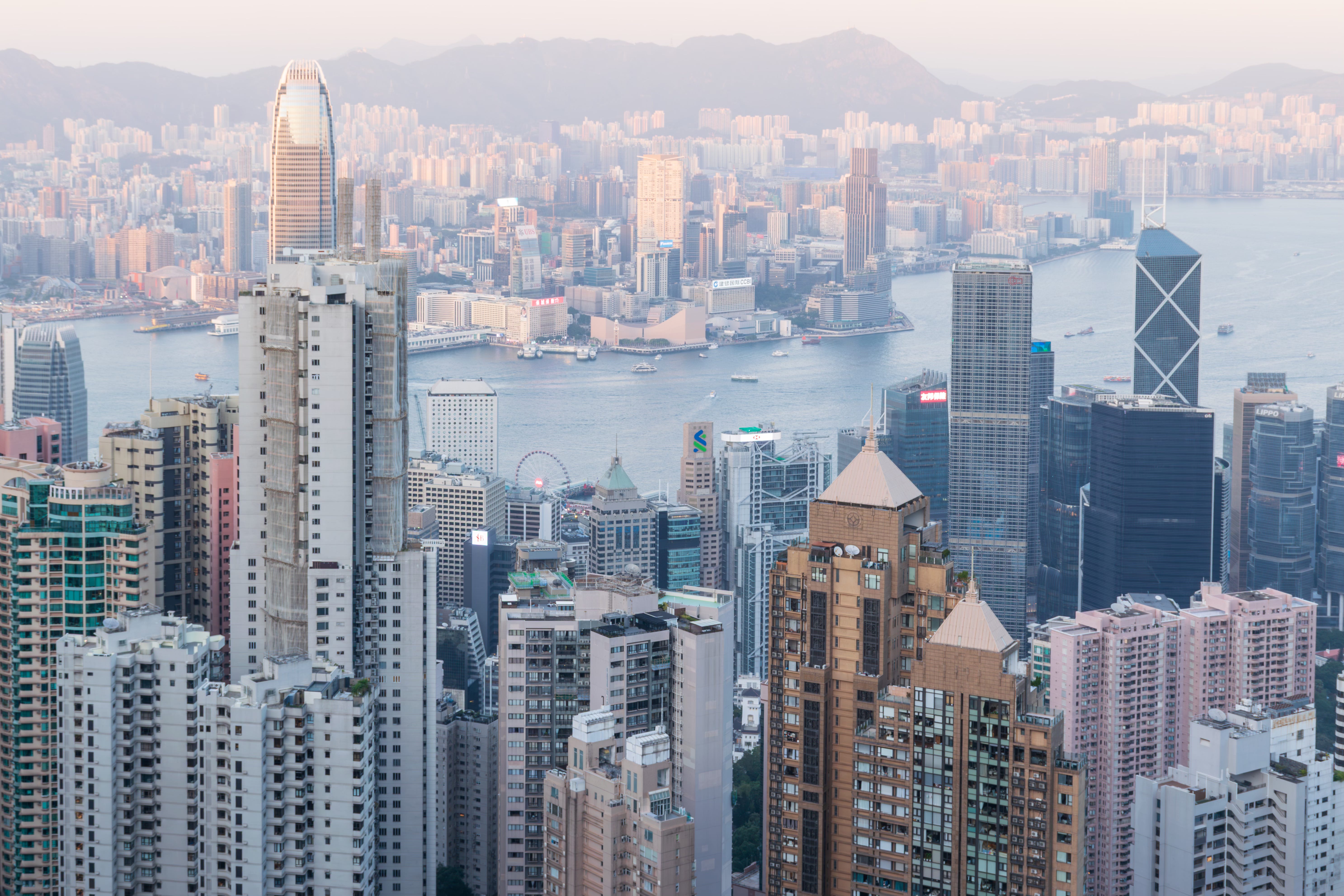
I had taken the tram before, but not at night. As it dropped steeply downhill, the city tilted at impossible angles, buildings seeming to fall toward us as the world flipped upside down. Hong Kong is a mind-altering dream. Legs and backs aching, we eventually found our way back to the ferry, where lights shimmered across the water and red-sailed junk boats glided past in the dark. Between the Peak, the Star Ferry, and the harbor walk, it felt like the perfect first day in Hong Kong.
Mercifully, I slept through most of the night. Jet lag usually defeats me, but this time my body seemed to cooperate. Just as the sun was rising, we went downstairs and walked along Victoria Harbour. It was cloudier than the day before, but no less beautiful.
We walked to the statue of Bruce Lee, Hong Kong’s most famous son, who introduced the world to a new style of martial arts on screen. I remembered sitting on the couch with my dad as a kid, completely absorbed in his films, Enter the Dragon and Game of Death.
It was afternoon by the time we hailed a taxi to the so-called Monster Building, a massive cluster of tightly packed residential apartment blocks. It has become popular for photography after a fight scene from Transformers was shot there. The building sits in a much more residential part of Hong Kong, far removed from the tourist-heavy areas of Kowloon or the business districts of Central. There were small shops at the base of the building, a woman feeding her parrot, immigrants from India and Pakistan sitting outside their stores, but the most notable thing was the apartment building itself.
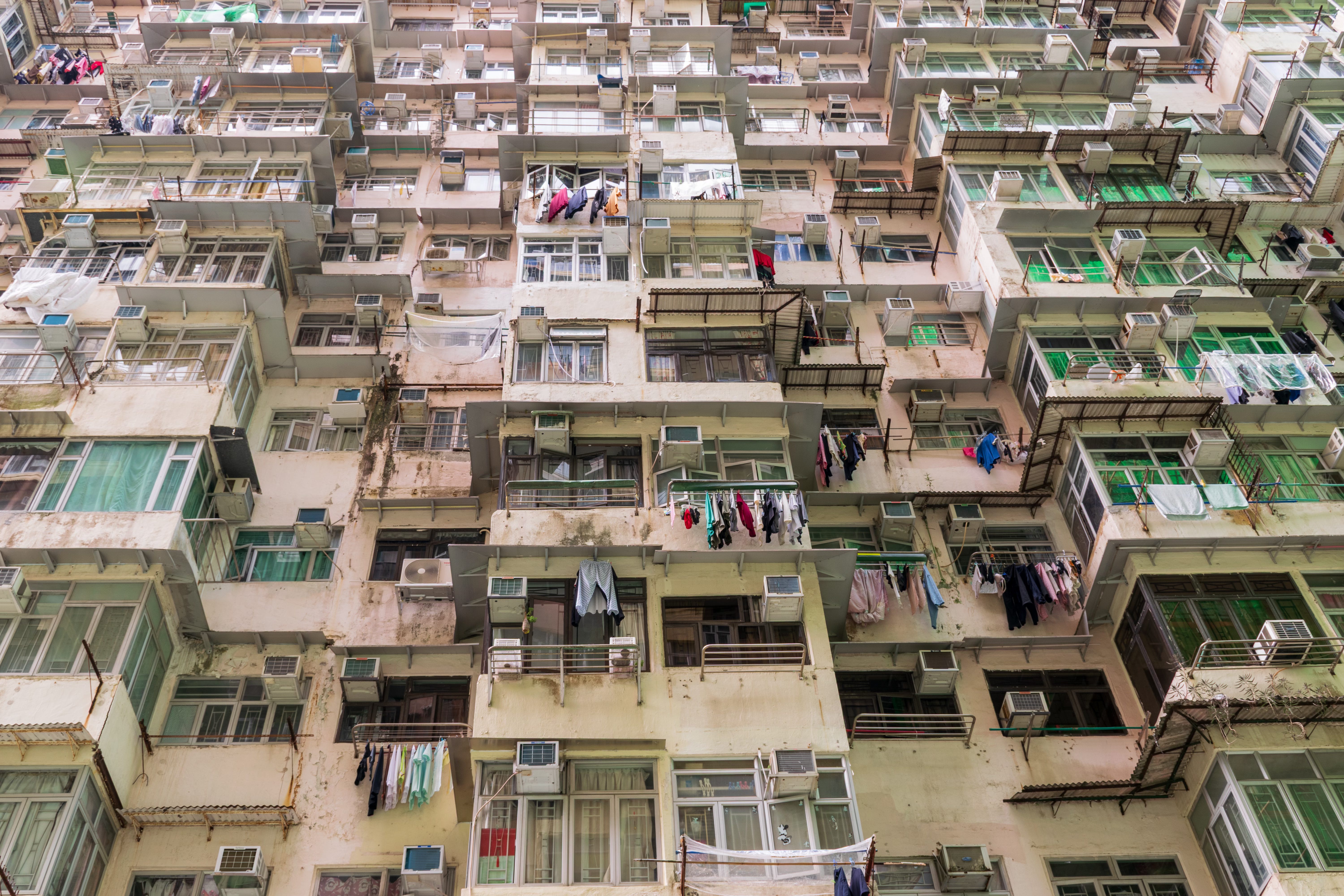
Stories upon stories of weathered balconies, laundry hanging from almost all of them, a scene that contrasted sharply with the wealth of the city. It reminded me of things I’d noticed earlier that morning, a man fishing right in front of the Chanel store at the K11 luxury mall, or a rundown fishing boat drifting in the harbor with the financial towers of Hong Kong Island rising behind it.
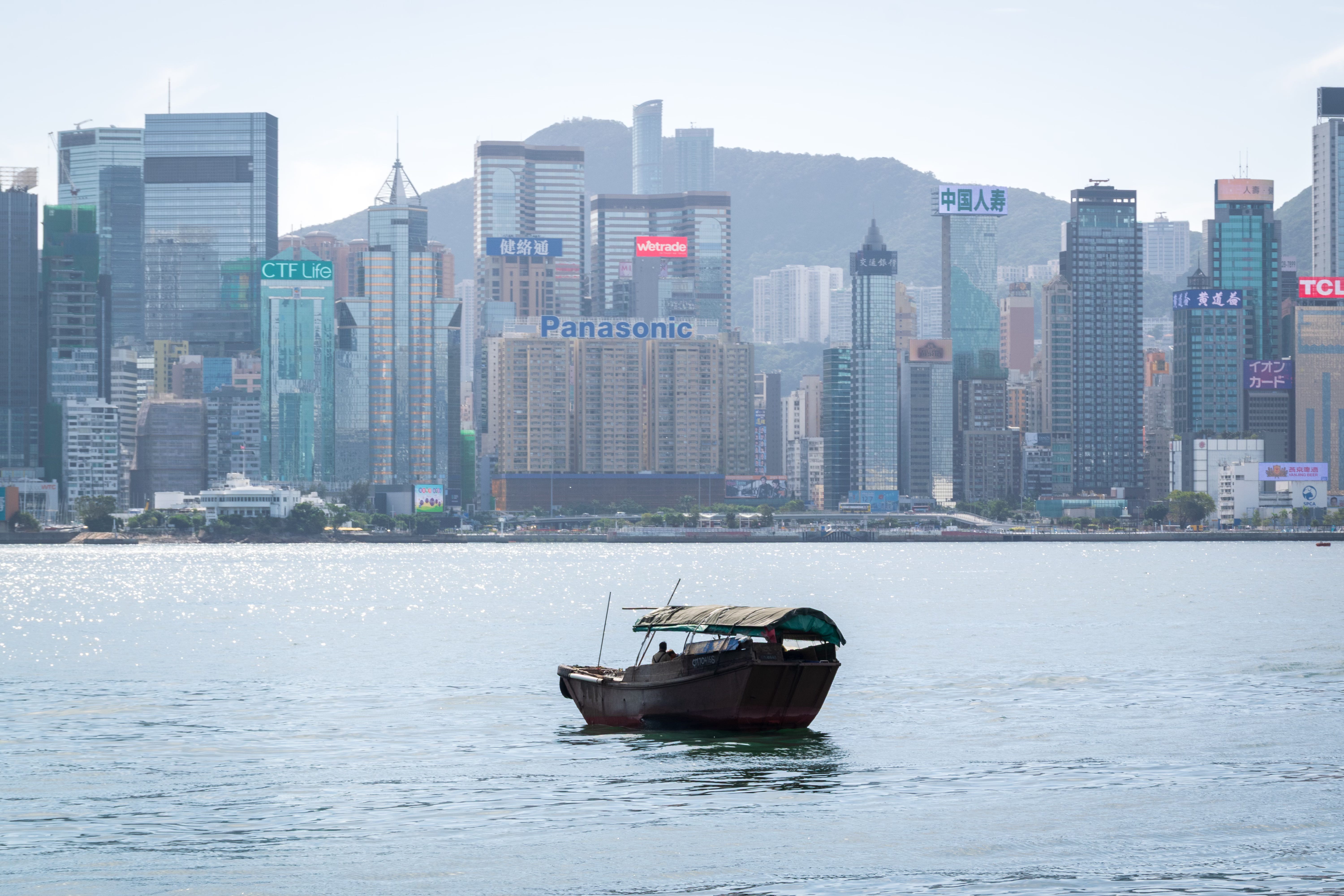
As a tourist, it’s these contrasts, these clashes of worlds, that make places like this so interesting. Standing there, though, it was hard not to think about the two parallel lives the city sustains. Just as I was staying in the number one hotel in the world, someone was sleeping in a shoebox apartment, living in conditions I couldn’t begin to imagine.
From here, we walked down the block and hopped on a ding ding, Hong Kong’s double-decker trams, named for the sound of their bell. We entered from the back and squeezed up a narrow spiral staircase to the second floor. We had no idea what line we were on, where we were headed, or where we’d get off, but for a few cents we took a tour through the heart of the city.
The trams date back to the early 1900s, introduced during Hong Kong’s time as a British colony. After more than 150 years under British rule, the city was handed back to China in 1997 under the “one country, two systems” framework, which was meant to preserve its autonomy, legal system, and way of life. In recent years, that arrangement has been steadily tightened, with Beijing asserting more control and cracking down on protests and dissent. Even in my short time there, Hong Kong felt different from mainland China, shaped by a history and culture that had evolved along its own path.
The windows were open, cool air rushing in as the world slid by. Street food smells drifted through the car. Construction noise, traffic, and voices blended together. We passed cemeteries pressed right up against the road, then massive buildings rising overhead. Cyclists glided along the tram’s car-free lanes. Crowds surged through pedestrian crossings, while luxury cars, Mercedes, BMWs, Teslas, raced past.
Bamboo scaffolding wrapped buildings under repair. Storefronts flickered past, some instantly recognizable, McDonald’s, Five Guys, Uniqlo, others a complete mystery, their signs written in Chinese characters. I kept noticing the color red. Maybe it had been ingrained in me from the moment I first saw those iconic taxis, but it was everywhere, red banking signs, a red Benz, the red tram itself. Earlier I’d noticed it again on the Ferris wheel by the harbor, on the sails of junk boats, on double-decker buses, even on the city’s flag.
The world rolled by this way until we reached a place called Happy Valley, where we switched trams and headed west toward Central.
In Central, we planned to take the outdoor escalators, but first we needed a break, so we ducked into a restaurant and tried pineapple buns. Despite the name, they don’t taste like pineapple at all, they’re only vaguely shaped like one, and they come sliced open with a thick slab of cold butter. The place was packed with locals. The waitresses’ efficiency bordered on rudeness, yelling directions and pointing people to open seats, while servers squeezed past with trays of noodles and soup.
Back outside, I’d never seen anything like the Central–Mid-Levels escalator system, a series of outdoor escalators that connect the lower streets of Central with the steep residential neighborhoods climbing the hillside above. It just kept going, rising higher and steeper as the city slid past. Massage parlors, Korean restaurants, people walking their dogs, all unfolding as you ascended. Between taxis, ferries, trams, buses, and now escalators, I felt like I was setting some kind of personal record for ways to get around a city. But this is part of the charm of Hong Kong’s infrastructure, you are never really more than an hour away from anywhere.
The next morning was slow. We took our time getting ready, lingering a little longer than necessary, savoring the comfort of the Rosewood before stepping back out into the city one last time.
The ride to the airport was quick, barely half an hour, and soon the city slipped away. We hadn’t been there long, but I fell back in love with Hong Kong the same way I had years ago. In its density, its contradictions, its momentum, it leaves an impression that lingers well beyond your stay.
Thanks for sharing, this is beautiful city.
Hong Kong is very colorful. Fireworks at Victoria Harbour is great. Ride in Open Double Decker Bus is great too. I visited Hongkong lot while travelling to China. One time, In United Airlines, Hongkong to Chicago flight, only 10% occupancy. It was a fun, You can seat or sleep wherever you want. This was before merger with other airlines. Have you visited Macau ?
Call me when get chance.