

Greenland
At the Edge of the World

A few years ago, flying back from the Faroe Islands, I glanced out the airplane window and saw Greenland for the first time, rivers of ice carving through snow-covered mountains, glaciers splintering into shards that drifted across steel-blue water. I remember staring down, transfixed, knowing that one day I had to go there. So when United Airlines announced a new flight from my home state to Greenland, I booked it without hesitation. When the universe gives you a chance to turn a dream into reality, you take it.
So here I was, only four hours after leaving home, descending into one of the most dramatic landings I had ever experienced. Sharp ridges and deep fjords cut through the coast below, the water scattered with ice. The plane wobbled in the wind as we touched down, a hint of the weather that would define my time in Greenland.
On the way to the hotel we passed rows of multicolored houses typical of Scandinavian countries, though these seemed more subdued, maybe the overcast sky was dulling their tones. The ten-minute taxi ride cost over twenty dollars, a quick reminder that Greenland would not be cheap. After dinner at a small cafe that radiated Danish hygge, we walked it off through backroads lined with Danish-red houses, ending at Nuuk Cathedral, whose gabled roof stands out across the tiny capital. Above it, on a small hill, stands the statue of Hans Egede, the “Apostle of Greenland.” From there we continued upward through the backstreets to the Myggedalen Viewpoint, the best overlook in Nuuk, with colorful houses scattered along the fjord and mountains stretching beyond.
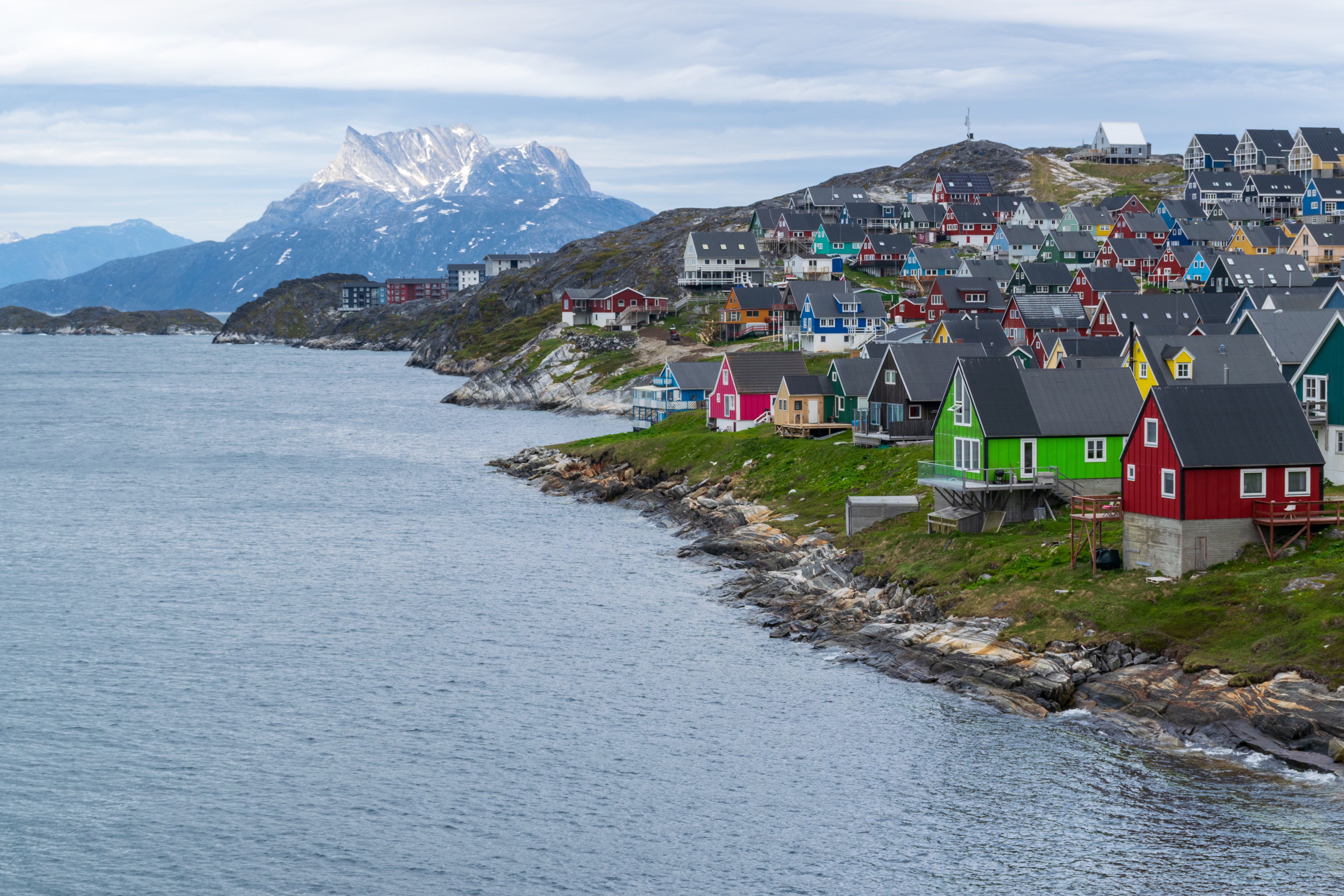
I woke before dawn for my flight to Ilulissat, the place I had planned to spend most of my trip. Nuuk was only an entry point, a stop before the real adventure began. We checked out, caught a taxi to the airport, and I felt the familiar nerves set in. For all the traveling I’ve done, I still can’t get used to the act of travel itself.
There was a long line at the airport but no one behind the check-in counter. That should have been the first sign. We waited, printed our baggage tags at the self-service kiosk, and stood there half awake. About thirty minutes later, a woman’s voice came over the intercom, calm and casual, announcing that all flights from Nuuk were canceled for the day. She said it so softly that most people didn’t even react.
Nuuk had left me underwhelmed, and the thought of being stuck here instead of among the icebergs of Ilulissat felt like punishment. I had come to Greenland to see its wild heart, not to be stranded in its capital. When I learned that flights were canceled not just for today but for tomorrow as well due to dangerously high winds, the disappointment hit harder.
I tried to stay positive. I’ve been lucky to travel so much with almost no real setbacks, or at least none memorable enough to matter, so I reminded myself to practice gratitude. Life is good, I told myself, and whatever extra I get is just icing on the cake.
After some rest we visited the Nuuk Museum, one of the few places in town I had wanted to see but hadn’t originally had time for. Maybe there was a silver lining in the delay. Inside we learned about Greenland’s colonization by the Danes and the loss of Inuit culture and religion. What struck me most were the boats, the patterned sweaters, and the five-hundred-year-old mummies preserved by the cold. The dark room that held their bodies felt eerie and intimate, as if time had forgotten them.
Nuuk itself felt bleak. Aside from small groups of vagabond boys, the streets were empty even in July, the warmest month at barely fifty degrees. Shipping containers and dumpsters were scattered around town, graffiti marked the walls, and nothing seemed to follow any plan. It had none of the charm of Tórshavn in the Faroes, let alone the larger Nordic capitals of Reykjavik or Copenhagen. By evening the optimism I had started the day with was gone.
The next morning I woke suddenly after a good night’s sleep, the room warm from the heater and a stream of cold air slipping in through a cracked window. The weather was miserable, a day best spent indoors.
The most memorable part of the day was a visit to a small souvenir shop where a man invited us into his workshop. He was fascinating. He spoke about his travels through Europe and New Zealand, his work in Parliament, carving, dog racing, and even hunting polar bears. He proudly mentioned gifting one of his carvings to French President Macron. Then he showed me a piece made from a bear claw, which both awed and saddened me. Bears are such majestic creatures, and it broke my heart when he showed me a selfie with one of the two polar bears he had hunted. Around the room were antlers, narwhal tusks, and bones. Instinctively I felt uneasy about the hunting, especially of animals so rare, yet I also understood it as a deep tradition among the indigenous people, something primal and tied to survival even if I couldn’t fully agree with it.
Later I followed Nuuk’s small waterfront, a so-called boardwalk lined with Soviet-looking apartment blocks that seemed almost empty. I had read about a Danish project that once forced Inuit families from remote villages into these “modern” buildings. The only sound was the wind rattling loose objects on the balconies. Occasionally a few kids wandered by. One unwrapped a candy bar, tossed the wrapper to the ground, and blew his nose onto the street. As the rain tapped against my jacket, I drifted back into thoughts of Ilulissat and the icebergs waiting there. I could only hope that tomorrow would finally bring me north.
Today was do or die. My flight to Ilulissat had already been delayed for days, and I was running out of time to reach the place I had dreamed most of seeing. A glacier cruise was waiting, one I couldn’t afford to miss. All morning I watched the weather, tracking wind speeds, studying the aircraft, and refreshing the departure board. Then, finally, a change. Planes began landing in Nuuk, and soon a few departed, even those bound for Ilulissat. A quiet sense of hope returned, though I tried not to let it grow too much.
We boarded the bus to the airport, and it finally felt like the dream of reaching Ilulissat was within reach. We checked in our luggage, got our boarding passes, and waited with a few other travelers. After a short delay, security opened and we were cleared to board. The winds were still strong, and I grew uneasy thinking about how this small propeller plane would handle the gusts and clouds. When the engines started, my whole body tensed, but once we lifted off it was smoother than I expected. I had never been so relieved to leave a place. Sorry, Nuuk, but you were just not for me.
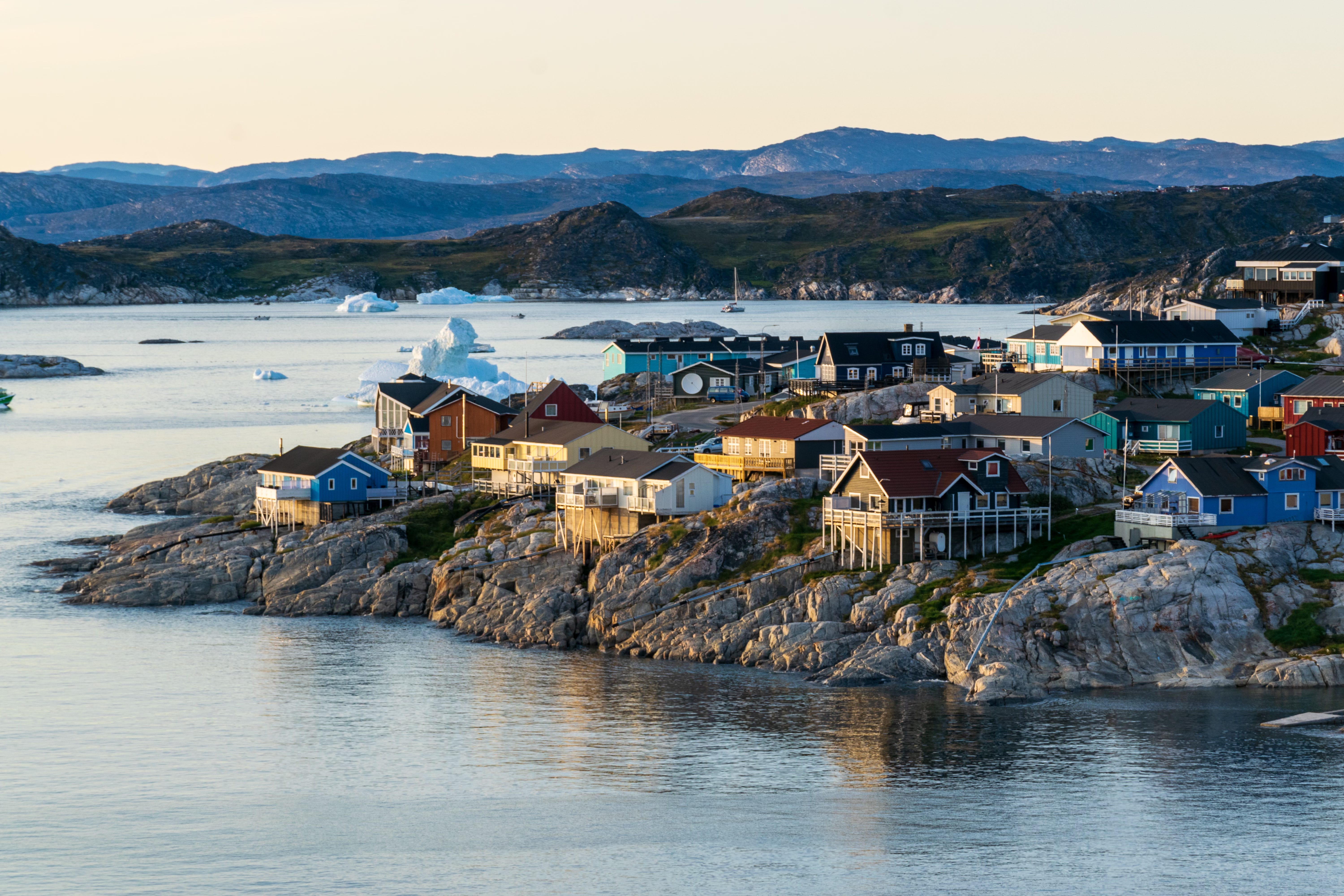
As we descended into Ilulissat, I knew I was in love. Icebergs drifted across the sea, and a sailboat with bright red sails cut through the water. The landing was smooth, and I had arrived in the place that had called me to Greenland. Baggage claim took minutes, followed by a short taxi ride to the Best Western, a welcome upgrade after the cramped hotel in Nuuk. The weather was brighter here, and I realized this was the farthest north I had ever been, my first time inside the Arctic Circle. From our room the view was magnificent. Beyond the town and its black church stretched a horizon filled with icebergs as far as the eye could see.
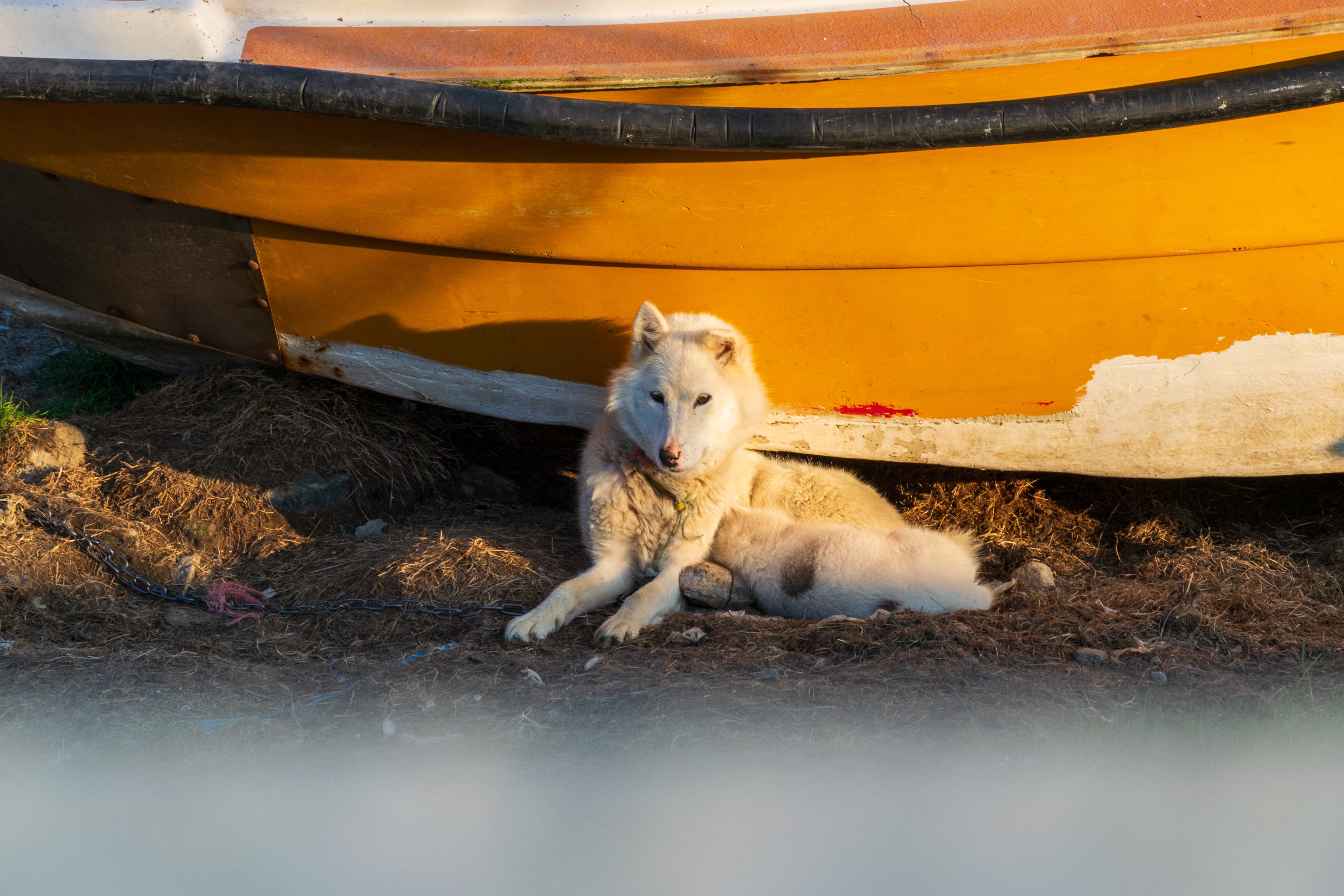
I wanted to explore right away, but hunger won. The only place open was a grocery store, where I grabbed instant pasta and chips for dinner. After eating, I set out for a walk. About twenty minutes from the hotel, the sound of huskies filled the air. At first there were only a few, then what felt like hundreds, yelping more than howling. Many were off leash, and one curious puppy followed me for a while. These were not pets but working dogs, and I had heard that pets are not even allowed above the Arctic Circle.
The trail began as a wooden boardwalk cutting through flat, marshy land. Then I saw it, ice rising higher than the surrounding hills, the tops of icebergs visible even from inland. Under the soft evening light, it was breathtaking. At the turnaround point a few benches faced the ice, and I sat there for a while taking it all in. I am a lucky man.
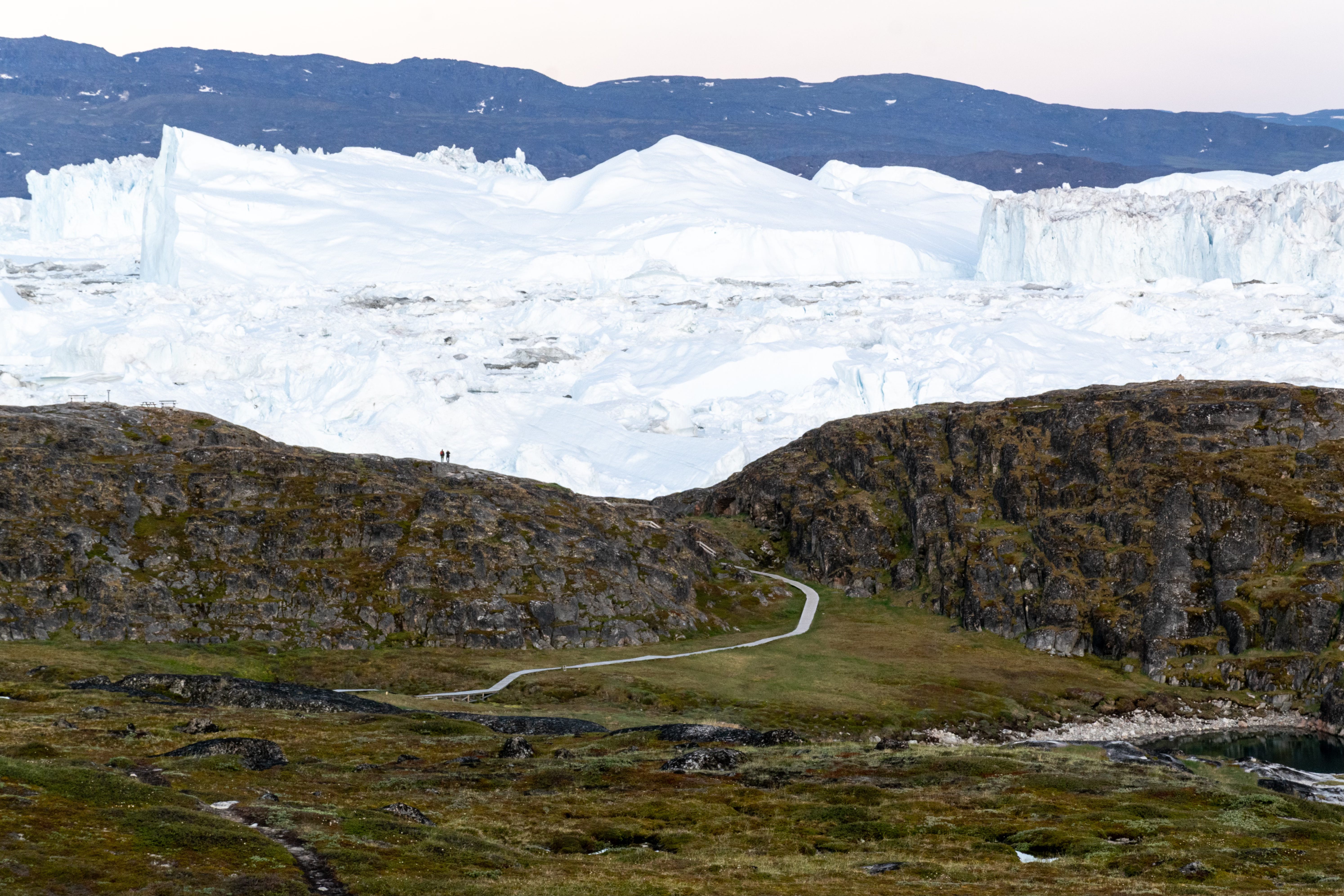
When I returned to the hotel, the sun still hung low in the sky. I asked Siri when sunset would be. It turns out the sun does not set in Ilulissat this time of year. It is a strange feeling to never see the day end, only an endless pale light that never fades.
I woke up a little before six, shivering near the window where the Arctic air had crept in overnight. Today we were heading out by boat to the Eqi Glacier, a tongue of the mighty Greenlandic ice sheet. As soon as we stepped aboard, the boat pulled away, weaving past icebergs the size of buildings. In the distance, some were so vast they formed a skyline, like glimpsing the silhouette of Manhattan from my hometown in New Jersey. The vessel could hold sixty passengers but was only half full. There was coffee, tea, and open decks at both ends for viewing the ice. The journey to Eqi was about eighty kilometers and would take three and a half hours.
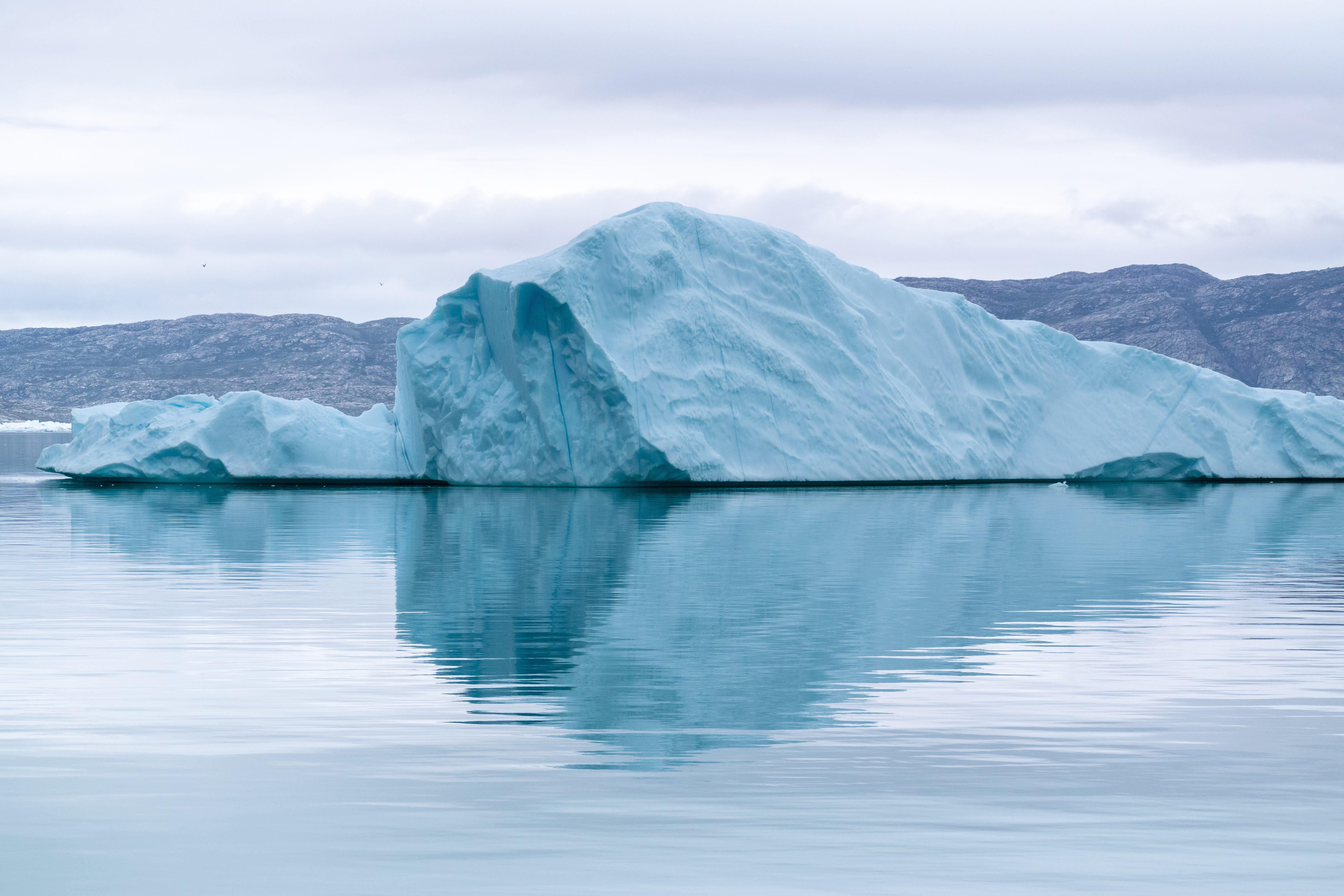
Before long came the first shouts of “whale.” We spotted a fin whale, the second largest in the world, and several humpbacks, their tails flicking the surface as plumes of water rose from their blows. Soon the water cleared of ice and the boat picked up speed. We passed waterfalls and cliffs, and then the ice returned, growing thicker and denser until the water turned to slush. A kilometer from the glacier, the engines stopped.
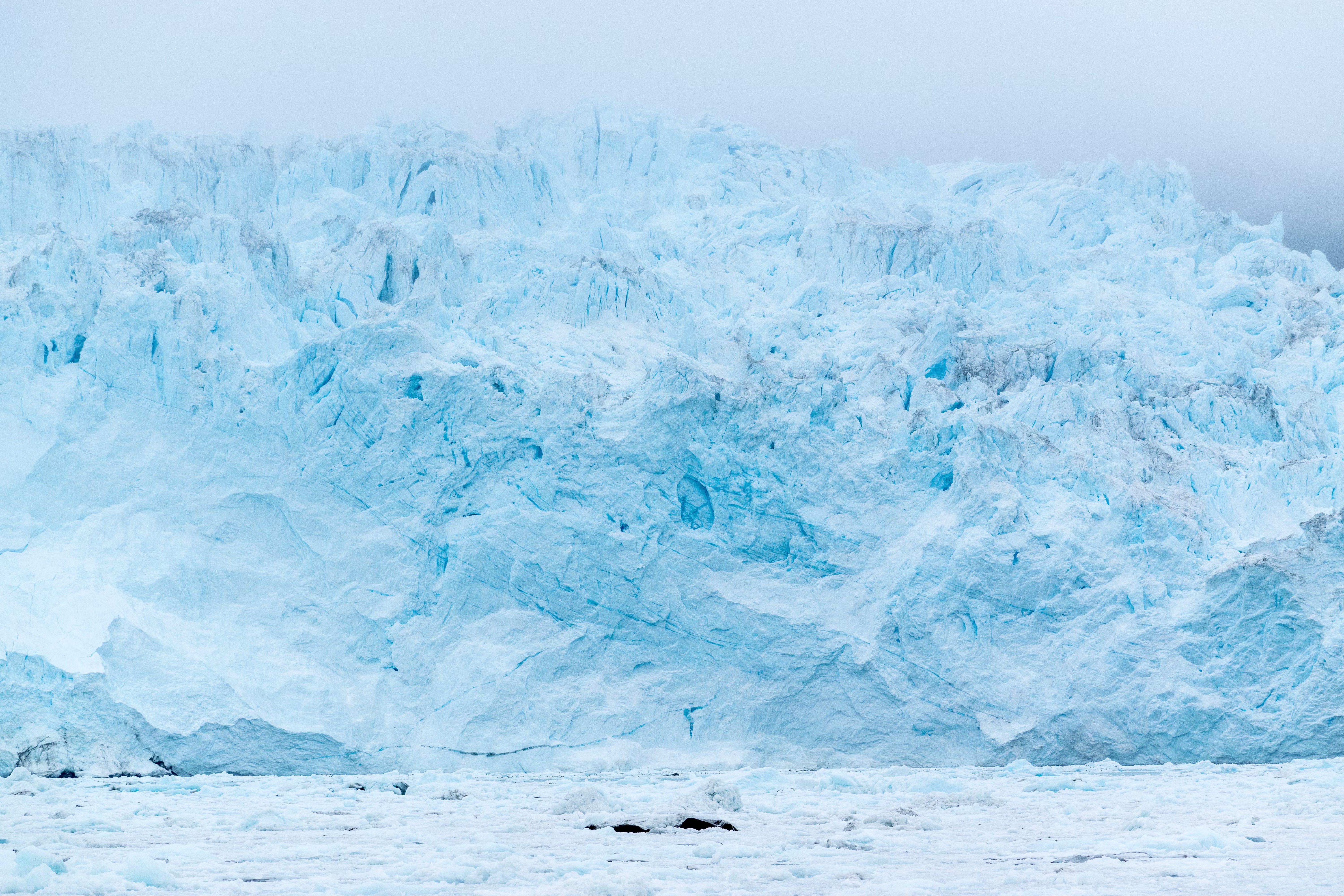
I stood in silence, surrounded by a world of white and blue. The glacier rose nearly two hundred meters high, its upper edge blurred by fog. The water was still as glass. Then came a deep rumble, and a section of ice collapsed into the sea, sending a slow wave rolling toward us. A few birds skimmed the surface. Even after visiting sixty countries, I had never seen anything like it. The colors, the stillness, the sound. It felt otherworldly.
After an hour and a half at the glacier, including a canteen lunch, we continued to the lodge where we would stay overnight. The boat nudged against a small cliff, and we climbed a short path to the main building for a briefing. We were told not to go down to the beach or wander too close to the edge because calving ice can send huge waves across the fjord. Then we were shown to our cabin. Inside was a warm bed, a sofa, binoculars, and heat. From the porch, about seven kilometers away, the glacier loomed in full view, groaning and cracking.
This place blended the hygge of Danish design with the raw beauty of Greenland. I napped on the couch, woke just in time for dinner, and walked ten minutes back to the cafe. They had asked for dietary preferences in advance and prepared a thoughtful three-course vegetarian meal with bread and herbed butter, a cabbage and pickled onion salad, roasted potatoes and vegetables with butternut squash purée, and marble cake with raspberry and almond butter. I had never eaten so well in Greenland, and watching the glacier in the distance, I knew I would miss this little camp when I left.
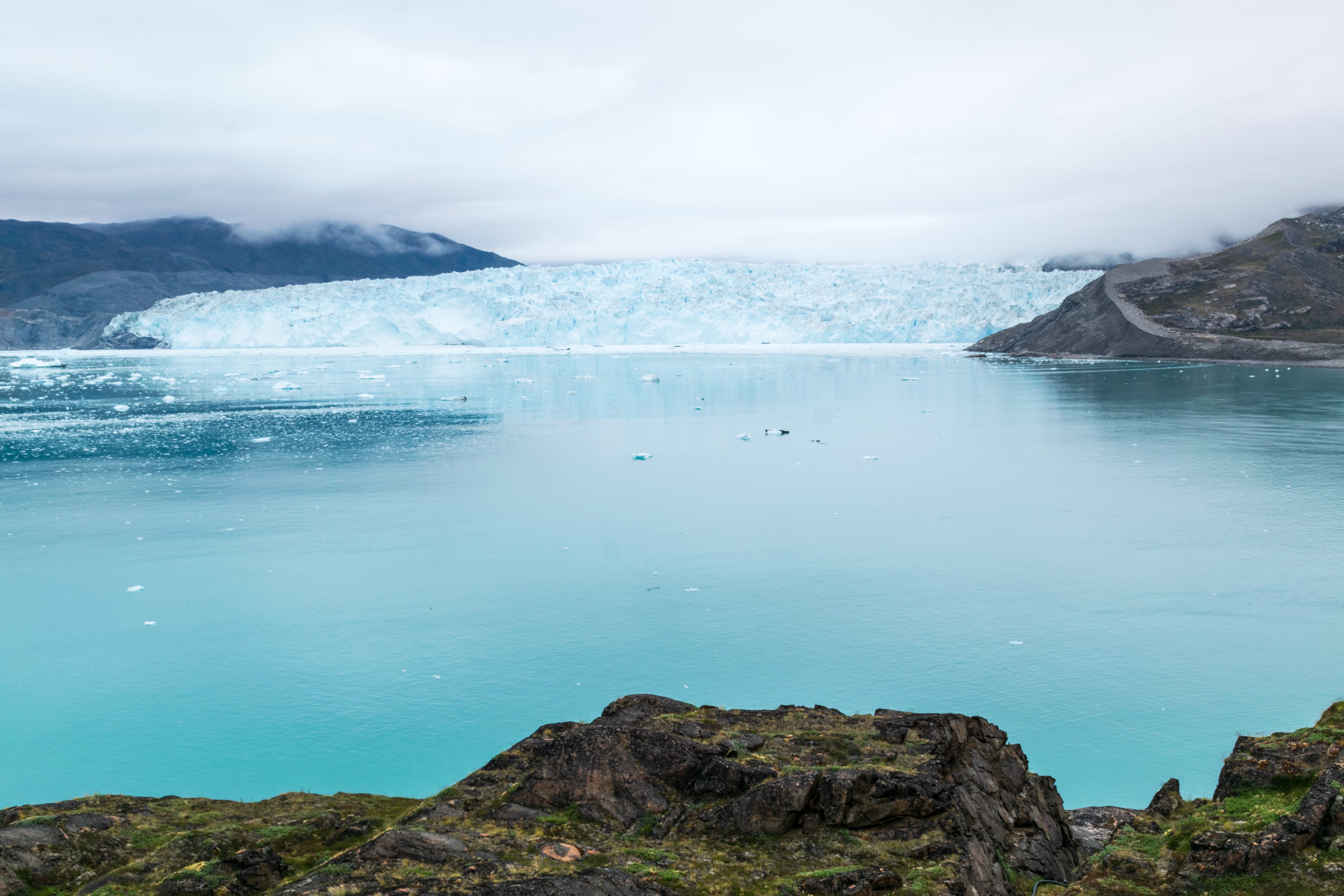
I slept surprisingly well at the Eqi Lodge but barely managed to wake up and missed breakfast. The fog rolled in and out all morning, painting the landscape in shades of blue and white unlike anything I had ever seen. I have never really traveled in winter or deep Arctic conditions, so I had no idea these colors even existed. Every few minutes the view changed with the fog and light. Sometimes the glacier’s reflection shimmered on the water, and other times it was completely hidden.
Four hours at the cafe, waiting for the boat back, passed quickly. Between staring at the glacier, talking, and listening to downloaded podcasts, I didn’t once miss having Wi-Fi or cell service. Eventually we lined up for the trek down to the harbor. The red boat appeared, cutting through the still gray water and leaving a ripple behind. The path down was steep, and with the weight of my camera bag I slipped and banged my knee. The boat back was fuller this time. The staff waved goodbye, warm and gracious as always. I will miss this place and its quiet kindness.
The return trip mirrored the first, with coffee, a muffin, more whales, and icebergs of impossible scale. Back in Ilulissat, we checked into our hotel and rested for a while.
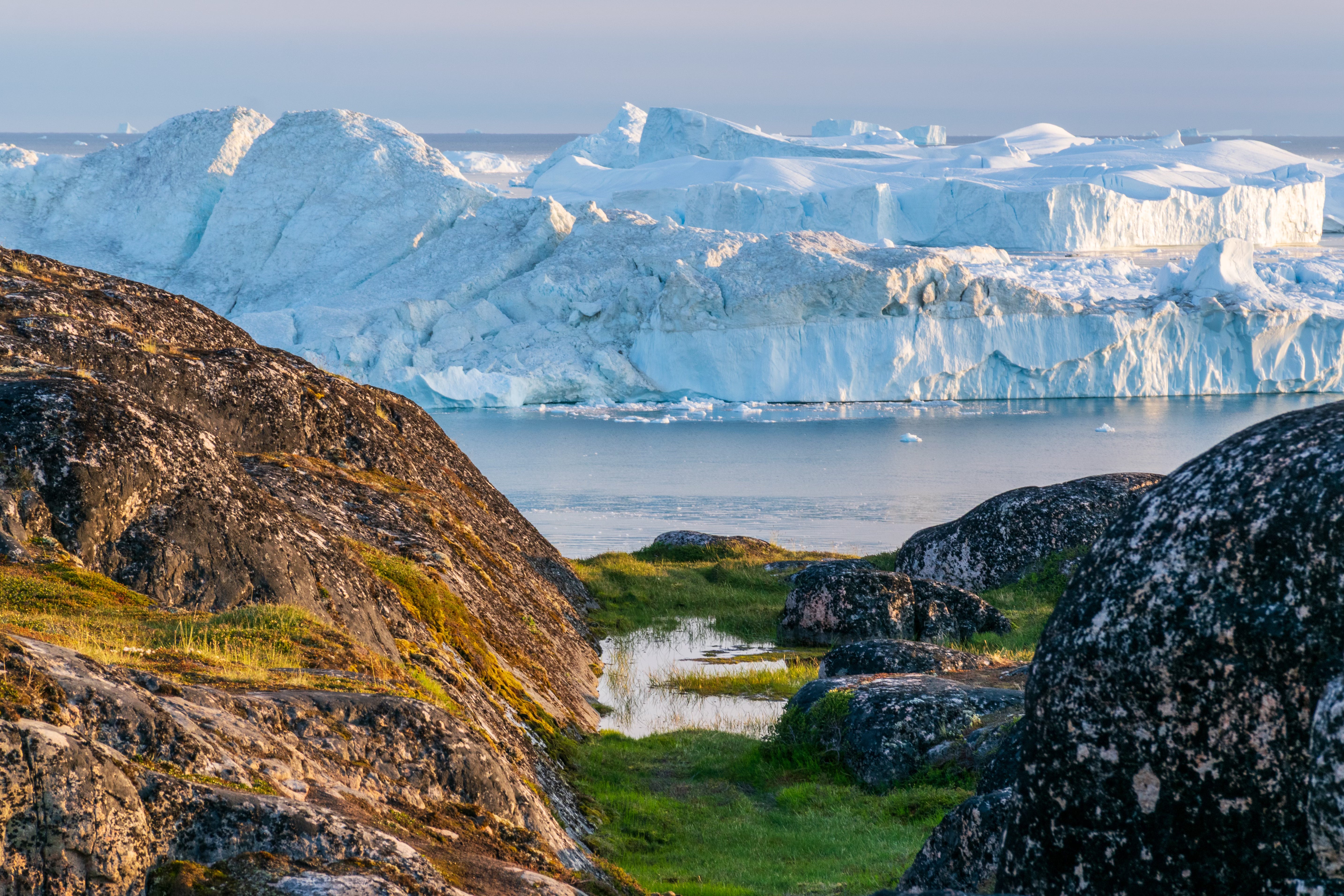
I was tired, but I couldn’t waste such clear weather. I set out alone on the trails, determined to see the Icefjord again. Leaving town, I passed huskies glowing in the low sun. Soon I reached the trailhead, walking counterclockwise to keep the ice in sight. The light was unreal, with the blue of the ice, the soft gold of the sun, the green patches of grass, and the brown of the rocks. The trail was easy, but I stopped constantly to take photos. For an hour and a half I followed the fjord back to the Icefjord Center, passing an old cemetery and the huskies again before returning to the hotel. I think that midnight hike will stay with me for the rest of my life.
Greenland is a country that teaches patience. The next day returned to gray skies and rain, and tomorrow I was due to fly back to Nuuk before heading home. The same unease crept in about the weather and flights, and I boarded an Icefjord “sunset” cruise in a subdued mood. After such a perfect day at the glacier, I worried this one might feel repetitive.
But the clouds began to clear, and as we passed the first icebergs, my mood lifted. You cannot grow tired of this beauty. Each moment here feels like a gift, and the only right response is gratitude.
On the boat I met a few travelers whose stories matched the landscape in their uniqueness. There was a South African woman and a Norwegian man who met playing Starcraft, and a Danish woman visiting Ilulissat while her sister and nephews stayed in Nuuk. Most unforgettable was our guide, a rugged Dane with a long beard straight out of the show ‘Vikings’. He told stories of snowmobiling alone through the backcountry for a week, steering a boat through winter ice for fifteen hours with his grandmother because she refused to fly, and joining a whale hunt. The people here are built differently.
As we cruised along, the guide shared stories about the Icefjord and the nearby glacier. Climate change is reshaping this place, the glacier retreating steadily, once stretching to where our boat now floated miles from its face. The melting ice affects fish, whales, and everything that depends on them. It was also believed that the iceberg which sank the Titanic came from this very glacier, drifting through these same waters more than a century ago.
Massive icebergs floated by, their scale beyond comprehension, knowing that only a fraction of their mass was visible above the water. The guide made drinks using ice from the sea and a local herb called Labrador tea. We returned to the harbor after eleven, the sky still pale and endless.
It had become hard to wake up in Greenland, mostly because I could barely sleep. The constant daylight made it impossible to rest properly, with full brightness even at midnight. I was averaging five hours a night at best.
After checking out of the hotel at ten, I spent most of the day in the lobby waiting for the 6:15 p.m. shuttle to the airport. The bus was packed with a Romanian tour group, luggage spilling into the aisle. At the airport I felt cautiously optimistic, but soon the familiar pattern began with a small delay, then a bigger one, and finally a full cancellation.
By eight that evening Air Greenland announced there were no hotel rooms available and that passengers would be taken to a school to sleep in dorm bunk beds. No, thank you. I quickly booked one of the last rooms on Hotels.com and caught the shuttle there. Still, the reality hit hard. We would miss our connection in Nuuk and be stranded in Greenland for several more days.
After the initial shock, I accepted our fate and went down to dinner. The restaurant served sourdough with creamy butter, beetroot soup, mushroom risotto, and a mocktail made from Labrador tea. Then my phone buzzed. A friend texted that the United flight from Newark to Nuuk had been diverted to Iceland because of the same winds that had grounded us. I was sent a video of the plane aborting its landing, engines roaring as it climbed sharply back into the sky. Suddenly, there was a chance. If I could reach Nuuk in the morning, I might just make the rescheduled flight home at 4:30 p.m.
The saga continued the next morning. I woke to yet another message about a delay, the same story I had seen play out all week. First twenty minutes, then an hour and fifteen. The weather in Nuuk was still bad, and departures were on hold. At that point, there was nothing to do but wait and hope this time would be different.
Around midmorning we finally lined up to board. There was a short stop in the tiny town of Aasiaat to refuel after barely twenty minutes in the air, but I didn’t mind. At that point, I was simply grateful to be moving in the right direction. As I climbed back aboard the small red Dash-8, I looked out at the massive icebergs floating beyond the runway, still a little dazed at how I had ended up here. The pilot smiled and gave a thumbs-up as if to say, “This is Greenland.”
Eventually we landed in Nuuk, where the airport buzzed with travelers who had been stranded somewhere in the country at one point or another due to the high winds. The Nuuk airport is especially unforgiving, fully exposed to the elements, and landings here are never easy. I am not sure if United will keep this route going. It seems almost impossible to sustain with this many delays and cancellations, even in the best weather month of the year.
Past security, the waiting area buzzed with travelers exchanging stories. Two friends had visited 112 and 100 countries. A woman was just eight short of seeing every nation on Earth, even North Korea back in 2014. A soldier spoke about his time in Iraq and Syria. Everywhere I turned, people traded tales of journeys, upcoming plans, and adventures across Greenland. These were my people. I often feel alone in that restless urge to leave everything behind and disappear into some far-flung corner of the world, but not here. Greenland is wild and raw, and those drawn to it are kindred spirits.
All was well that ended well. As I write this from the plane bound for home, I know that in a few days, maybe even a few hours, the frustrations of weather and delays will fade. What will remain are the blue icebergs, the white glacier, the whales, and the feeling of standing at the edge of the world, already wondering what’s next?
Really enjoyed this one :) The photo of the Nuuk houses really contrasts with your description of the city. Even though you were stranded, it must have still been an interesting place to explore. One day I'll make it to Greenland!